12/23/2017

a wayward weirdo

Rejection, interestingly, ended up being a useful teacher in the process. I would bundle three or four of what I considered to be my most well crafted poems and include a little weirdo to round out the submission batch. Most all of the poems were rejected most all of the time, but when one would find a home, it was often a wayward weirdo, a poem where I quite palpably did not know what I was doing. And in grappling with that bewilderment, I’d had to reach outside what I knew and write toward what I didn’t.

- Michael Bazzett, from his essay "How Fetishizing ‘Craft’ Can Get in the Way of a Good Poem" over at Literary Hub. You can read the whole thing here.

12/18/2017

to be read by people for whom poetry is an unnatural word

I really am angry at poets - and there are enough of them around, and I try not to be one of them - whose poetry has to show their great learning, and whose poetry is continually moving away from the average person who might happen to pick up a book and begin leafing. I think many poets - and I could name them, but I won't - do a disservice to you or me or other people who might have the same sorts of ambitions... I would like to be read by people for whom poetry is an unnatural word. We've been talking about this, you and I, we know that there's a whole bunch of people - whom we don't look down at for it - for whom poetry is an alien concept, and they shake their heads and turn and look somewhere else. Fine... But I do want to allow that person whom one imagines is the "non-poetry reader" who randomly picks up the book, I don't want to have him or her turn away from it and put it down and say "Oh, I always knew I disliked poetry" and then start looking wherever they normally look.

- Don Coles, in discussion with Jay Ruzesky, from Ruzesky's short video "Don Coles: Fire to a Trail of Thought". You can watch the whole thing here, or in the embedded video below:


Don Coles: Fire to a Trail of Thought from Jay Ruzesky on Vimeo.

12/14/2017

January Dead Poets Reading

The next Dead Poets Reading Series event will take place at the Vancouver Public Library's Central Branch (Alice MacKay room) on January 14th, 2018, from 3-5 PM.

It will feature:

Richard Brautigan, read by Kelsey Klassen
Don Coles, read by Rob Taylor
Czesław Miłosz, read by Bethany Hindmarsh
Helene Rosenthal, read by Cynthia Flood

Attendance is free. Visit the DPRS website for more info on the series.

And yes, the Rob Taylor in the list above is me...

It's been almost five years since I last read at the series. I read Jack Gilbert in March 2013 (and wrote a little about Gilbert at the time here):

Me (Jack Gilbert), Aislinn Hunter (Marina Tsvetaeva) and Bren Simmers (Jane Kenyon)
When I thought of reading Don Coles' poetry this time around, the poems I would read came quickly. As with Gilbert, I've been a fan for a long, long time, with many a dog-eared book on my shelf. I've similarly admired Coles' interviews, most especially this long interview with Evan Jones, from the Manchester Review (from which I've twice quoted on this blog).

I was also very fortunate, in the last few years of his life, to get to know Don personally. He was as kind and encouraging to me as Richard Sanger described him in a recent Walrus profile, and I have so many good things to say for the role Don's poetry, interviews and friendship have played in my development as a writer. But, for now at least, I will save them for January.

I hope to see you there.

12/13/2017

absorbed and shaken

You know, the day of the Forward Prizes in 2014, when I was there with my first-born, I had a cup of tea with another poet who had just become a parent too, and they told me that their editor, a very prominent and respected male poet, had told them not to write about becoming a parent - “allow yourself one or two” he’d said “but any more and it’s just embarrassing”. That story haunted me during my son’s first years although for a long time I felt ashamed rather than angry about it, because I believed it was true. I thought ‘Writing about this is the one thing keeping me alive, and it’s seen as embarrassing?’ Embarrassing! For who? Embarrassing to be a mother and to think about being a mother and to be absorbed by it and shaken by it? Embarrassing to make life, to make a creature with a soul, to have felt life and death move so closely?

- 2014 Forward Prize winner Liz Berry on writing about motherhood, in conversation with Natalya Anderson over at The Poetry Extension. You can read the whole thing here.

12/12/2017

Poetry London Review of "The News"

This review of The News originally appeared on the Poetry London website in advance of my reading there in November 2017. I'm archiving it here. Great thanks to Katarina Meneses for her thoughtful read. 

You can find links to other reviews of The News on my website.

---

Delivering Big News Through Poetry: Rob Taylor’s The News
By Katarina Meneses

Rob Taylor’s The News is a collection of poems divided into the number of weeks of his wife’s pregnancy. On the surface, the collection of narrative poetry concerns itself with a soon-to-be father adjusting his life to prepare for his new child. However, it is a much deeper story that unexpectedly makes a connection to the reader with its down to earth plot. As each week passes, the narrator discusses topical events of that week, from having guests over for Christmas and discussing the famous cranberry sauce, to the devastating news of countless shootings due to persistent racism in North America:

Thirty-Eight Weeks

in the summer of your birth
“See You Again” topped the charts
and I lost track of the shootings.
By police. Of police…

When people discover that they will become new parents, many resort to a variety of parenting books to successfully raise their new child. Taylor, on the other hand, decided to write his own instead. The book is enjoyable as it makes connections to the real world with the news events that were happening, such as a policeman being shot, or more racism. The narrator discusses everything from accompanying his wife for her ultrasounds to experiencing anxiety over his child possibly having a disorder. The poems make each situation feel incredibly real through Taylor’s narrative voice, as it feels conversational. These are ordinary things that new parents go through and may be able to relate to:

Twenty Weeks

First thing in the door we pinned up
the scans, pass them from kitchen
to bathroom to bed. You could be
anyone, but we pause and insist –
you’re this one, this one.

The book not only tracks the progress of the unborn child; it also tracks the growth that both the husband and wife go through to prepare themselves for the life-changing moment when their child comes into the world. His wife’s name is finally revealed, a first for any of Taylor’s works, showing their relationship changing as they grow together.

It is interesting to note that Taylor has decided to take passages from other writers (such as Grace Paley, Rebecca Solnit, Albert Camus) and incorporates them into his work. At first it may seem odd because he is archiving his own experience with his first child, but delving deeper, readers can see how well it fits with his own work: ultimately, he is expressing how deep his experience is by making connections with others throughout history.

“Sixteen Weeks” contains a passage that illuminates the fear parents go through, wondering if their child will be healthy or will suffer complications. Taylor expresses his worries in each week, but week sixteen is the one that stands out the most as they go to the doctor’s office to get a checkup; even though they are given good news, Taylor always thinks there is that small chance that something could go wrong, as it always seems to be proven in the daily headlines.

Sixteen Weeks

The bloodwork is in –
a 1 in 20,000 chance
this will all go to hell
so we go to the phones
and you’re out…
…The technician’s
voice when she told us
our odds couldn’t be better –
all other numbers she delivers
are worse.

Overall, the collection is incredibly enjoyable as the poems seem realistic and relatable. Although the book may be most appealing to parents, the book is great for all, as it opens the minds of readers to realize the anxieties of welcoming a new life into the world, which is incredibly difficult as portrayed by Rob Taylor in The News.

12/11/2017

a rule to which I was an exception

Do we need to muster the political will required to take the measures still available? Absolutely. But do we also need to consider how to encounter the reality of climate change, how to feel it, how to live with feeling it? I think we do, though it scares me. T.S. Eliot wrote in the opening to “Four Quartets” that “human kind / cannot bear very much reality.” I used to think he was writing about other people, about a rule to which I was an exception, but I’m humbler now and see myself in his words. I can handle only so much.

- Sue Sinclair, from her essay "As the World Ends, Has the Time for Grieving Arrived?", originally published in Brick. You can read the whole thing, republished on Lit Hub, here.

12/08/2017

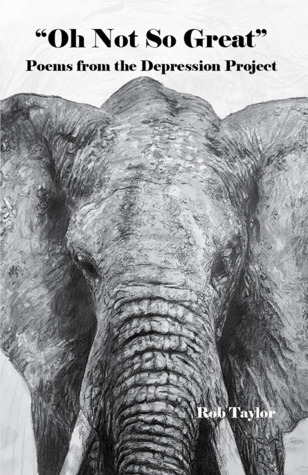
"Oh Not So Great" Giveaway

This title sure does lead to some awkward post titles...

Leading up to the January 20th Vancouver Book Launch of "Oh Not So Great": Poems from the Depression Project, I will be giving away two copies of the book over at Goodreads. The contest is free to enter - all you need is a Goodreads account.

Just click the button below to enter. Good luck!


Goodreads Book Giveaway


"Oh Not So Great" by Rob  Taylor

"Oh Not So Great"

by Rob Taylor


Giveaway ends January 19, 2018.

See the giveaway details
at Goodreads.


Enter Giveaway


12/07/2017

Reading Tour Report

As per tradition, here's a photo of the foolishly large pile of books I came back with from my recent book tour. Eighteen in total, up from last year's twelve, though still better than 2011's twenty-four. And technically five of them came with me from Vancouver, with the goal of getting them signed by the authors (a success with Chris Banks, a spectacular "forgotten-in-Hamilton" failure with Roo Borson).

Here they are, with notes on their city of acquisition:


The Essential Richard Outram, ed. Amanda Jernigan (Hamilton)
Cardinal in the Eastern White Cedar, Roo Borson (London)
Descent of Man, TC Boyle (Toronto)
Wherever We Mean to Be, Robyn Sarah (Toronto)
Personal History, Roo Borson (Vancouver)
Rain; road; an open boat, Roo Borson (Vancouver)
Night Walk, Roo Borson (Vancouver)
Short Journey Upriver toward Oishida, Roo Borson (Toronto)
The Cloud Versus Grand Unification Theory, Chris Banks (Vancouver)
Englishing, Dominique Bernier-Cormier (Toronto)
The Celery Forest, Catherine Graham (Toronto)
Her Red Hair Rises with the Wings of Insects, Catherine Graham (Toronto)
Bonfires, Chris Banks (Toronto)
Earth and Heaven: An Anthology of Myth Poetry, ed. Amanda Jernigan (Hamilton)
A Ragged Pen: Essays on Poetry & Memory, ed. Robert Finley (Toronto)
Retreats, Karen Solie (Toronto)
Variations on a Grapple, John Haney and Amanda Jernigan (Hamilton)
Living in the Orchard: the poetry of Peter Sanger, Amanda Jernigan (Hamilton)

I stayed rather disciplined until I arrived at Knife Fork Book in Toronto, and then everything went to hell. What a lovely shop and reading space, and now home (hopefully only temporarily) to a couple copies of The News and "Oh Not So Great".

Knife Fork Book, Toronto
A highlight of the trip was a really wonderful reading in Cobourg with my good friend Liz Ross, who is much-of-the-way pregnant and who had someone approach her after the reading and say "I thought to myself, 'She'd better read first or there's going to be poetry all over the floor!'", which was the grossest and most delightful thing I heard all trip.

Liz Ross, Cobourg

Reading in Toronto with two poets I deeply admire, Chris Banks and Catherine Graham, was another highlight, as was a reading at Redeemer University College in Hamilton, complete with CanLit caricatures on the wall!

Art Bar in Toronto!

Lashing Lenny...

and Little Red Peggy.

After that I forgot to take pictures, but the readings just kept getting better. London and Hamilton were so good to me they made me blush.

Thanks to everyone who came out to my readings, bought books, didn't actively heckle throughout my sets, etc. etc. And to the organizers of the various series' - a deep thank you, and: wow! We don't have our act together out here on the West Coast, not compared to you. It was amazing to see how communities rally around their series' and the touring authors who come through. Something to work toward out here.

12/03/2017

"Oh Not So Great" Vancouver Book Launch


The launch itself will be oh yes so great, of course.

I'm excited to announce the Vancouver launch of "Oh Not So Great": Poems from the Depression Project!

The event will be a first for me - a collaboration between poets and doctors to create an evening focused on the intersection of mental health and art, with the book's poems at its centre. The evening will be hosted by Fiona Tinwei Lam, whose anthology The Bright Well: Contemporary Canadian Poems on Facing Cancer, also published by Leaf Press, very much inspired my choice to send the "Oh Not So Great" manuscript to Leaf.

Before my reading, short introductions to the book and the research behind it will be presented by Dr. Alan Bates, President of the BC Psychiatric Association, and Dr. Patricia Gabriel, who dreamed up the depression project and recruited me back in 2011 to join her as the project's resident poet.

Following the reading a short panel discussion will take place among all the participants. The whole thing will take around an hour and there will be more-than-enough free snacks and plenty of very affordable books for you to take home. Our hope is the event will appeal to poetry fans, physicians and people living with, or curious about, depression, alike.

The details:

“Oh Not So Great”: Poems from the Depression Project Vancouver Book Launch
UBC Medical Student Alumni Centre (MSAC)
January 20th, 2018
7 PM Doors, 7:30 PM Start
2750 Heather Street, Vancouver (Next to VGH)
Hosted by Fiona Tinwei Lam
Introductions by Dr. Alan Bates and Dr. Patricia Gabriel, and a panel discussion to follow.
Free, and free appetizers!
Books for sale!
Poster:


You can RSVP via the Facebook event page here.

I hope to see you there!

11/30/2017

collapsed into something coherent - "The Habitual Be" by Chimwemwe Undi


listing (V.) - Chimwemwe Undi
in dog years, I am dead. in Black years, alive.
so: exceptional, increasingly so. I ask strangers
for directions on pocket scraps & build myself
a map home as cohesive as a litany
i am having trouble remembering.
 
i am having trouble remembering
there are too many bodies in this room built for bodies
we are magic typecast as disappearing acts. history
whispered into memories.
 
& easier things:
1. the prime ministers in chronological order,
2. My Very Educated Mother Just Served Us Nachos,
3. the angle at which the earth leans, shaking us off like water
 
there is too much to say
for this mouth built for praying
there are too many names to unhear
so I don’t have to remember
or truly, repeat to meaninglessness
or truly, forget them,
outrage a poor mnemonic device
 
I am having trouble remembering
I am forgetting & that is the worst part
I cannot hold a name long enough
to know it. even the faces are growing statistical,
the write ups into archives. I know guilt better
than grief, as well as a restlessness,
better than a Black body breathing still

from The Habitual Be
(Akashic Books/APBF, 2017).
Reprinted with permission.


---
The Habitual Be
by Chimwemwe Undi
Last year I interviewed Ngwatilo Mawiyoo about her poetry chapbook Dagoretti Corner, which appeared as part of the 2016 incarnation of the New-Generation African Poets chapbook box set. Ngwatilo was living in Vancouver at the time, and it was a great joy this year to see that another poet with Canadian connections, Winnipeg's own Chimwemwe Undi, is featured in the 2017 edition.

The series, helmed by poets Kwame Dawes and Chris Abani, is now in its fourth year and continues to grow (this year's edition features ten chapbooks, up from eight in 2016). It's one of the best, most eclectic, most engaging reads you'll have each year, and I can't recommend it enough.

This goes doubly for Chimwemwe Undi's The Habitual Be. The chapbook is equal parts personal and political: its politics infused into its intimate relationships; its relationships anchoring its politics in real bodies and lives. Its poems explore what we can learn from one another (across cultures, across histories, across the disparate parts of ourselves), and the limitations of that learning, be the subject apartheid, Indigenous reconciliation, romantic relationships, or religious faith.

"These are poems to break a spell," says Tsitsi Jaji in her introduction to the chapbook, and I couldn't agree with her more. But also, they cast their own. New spells, better ones. Songs, really. Full of doubt and limitations and hopeful, good thought.

I was lucky enough to chat with Chimwemwe about her chapbook this fall, and the conversation touched on the aforementioned politics, the inspirations for her poems, how spoken word has shaped her page poetry, and much more. I hope you enjoy!

Chimwemwe Undi doesn't ever have scraps of paper falling out of her pockets
because she carries five laptops with her at all times.
Photo: Derek Ford Studios.

---
Rob: The opening lines of The Habitual Be's first poem, "listing (V.)", are as arresting as any opening lines I've read in quite some. How did they come to you, and at what point in the process of writing the poem? More generally, would you say there is a common way in which you "build" your poems out? Do you usually start with an idea, an image, a line?

Chimwemwe: This poem is a big example of how coming up through spoken word has influenced my writing. That little bait-and-switch at the beginning elicits audience laughter and then, usually, a sigh or murmur exactly when their guard is down. The first line of this poem, I saw on a hat at a truck stop, bizarrely enough, and jotted down in my smartphone notepad. Most of my poems are born like that, from disconnected ideas found and gathered over the course of living, and then eventually woven together or rather, like, collapsed into something coherent.

My writing style is about 90% scavenging. I imagine if I was living and writing before the time of the smartphone, I’d be that caricatural poet with scraps of paper falling out of their pockets.


Rob: In her introduction to your chapbook, poet and academic Tsitsi Jaji notes that "These poems... bear witness to Southern Africans' deep history of itinerate being." And your bio attests to this, listing Zambia, Zimbabwe, Namibia, South Africa and Manitoba (both "Treaty 1 territory" and "Winnipeg") as places of personal grounding. The poems themselves move between Africa and Canada, often quite fluidly ("My father says (laughing) that Anishinaabe sounds African"). How do you think place shapes a person?

Chimwemwe: Reading Tsitsi’s incredibly generous intro to my chapbook is one of the greatest joys I have experienced as a writer, I will say that. I’m an immigrant who has never really called another place home. I’ve always had a Canadian passport, but lived much of my life in southern African countries that are not the countries my parents grew up in. I have a name and a body that a lot of people read as a neon sign indicating I am not truly from here, and that has, to an extent, been true everywhere I have been. Place has shaped me and my work a huge amount, but more often by rejecting some part of me than by really grounding me in any way.


Rob: "I’m an immigrant who has never really called another place home" - that's a striking thought, and connects a bit with your poem "Mzungu". The poem is about a young interracial relationship gone bad, and it takes ideas of "the other" and grounds them in the personal, and in the body. The title itself (a word used in many East and Southern African languages to refer to white people, but which technically means something more along the lines of "wanderer" or "foreigner") feels particularly apt. Who, or what, is being addressed by the title (the boy's whiteness, his gender, or the speaker's own foreignness in the situation) seems to shift around as the poem advances. How, and when in the process or writing the poem, did you come to that title? What does the word mzungu mean to you now, writing it in Winnipeg outside of the context of its usual usage, as an "immigrant who has never really called another place home"?

Chimwemwe: The context of this poem has changed, as has its referent. I will say the piece is less about a specific relationship than about unlearning to pursue the stereotypical white male protagonist as dictated by heteronormativity and white supremacy and, like, the Disney Channel. Mzungu, by itself, to me, has always been as much adjective as noun, and uttered in isolation, describes a sense of both cluelessness and entitlement that is magnified when that mzungu is on their home turf, so to speak.


Rob: Speaking of your "home turf" of Winnipeg/Treay 1 Territory, The Habitual Be features a number of poems which touch in one way or another on Indigenous issues in Canada, most explicitly "Sangena", where you compare South African apartheid with Canada's treatment of Indigenous peoples. You write, "and why should it be different? / What is different?", then later "Suddenly we are turning two blind eyes and pretending that they are blue." How has your background shaped your thinking on the politics around Indigenous issues in Canada? And vice versa, how has your awareness of Indigenous issues affected your thinking about Southern African politics and history?

Chimwemwe: My understanding of southern African history, and indeed of Canadian history, is emerging, and consists of a lot of unlearning and assessing what I feel I already know. My master’s thesis dealt partially with the South African government’s attempt to foster reconciliation without fully and critically acknowledging what was being reconciled and why. This is something I see here in Canada: an attempt to decolonize without unmaking the colony, and I’m frustrated by and fascinated with these tensions and the ways that colonialism imitates itself as it makes nations and spreads across them. This shows up in my poetry, in my activism and teaching, and probably in my water cooler banter.


Rob: Ha! And "decolonize without unmaking the colony" - yes, exactly!

Most of the poems in The Habitual Be are lineated, while "Sangena" is largely a prose poem, and "A History of Houses Built Out of Spite" is, strikingly, a lineated poem presented as prose, but with slashes to mark the intended line breaks. Could you speak a bit about your feelings around lineated v. prose poems, and the choice you made in "A History of Houses..." to straddle the two? How do you think each influences the reader's experience of the poem?

Chimwemwe: It might be a result of not having any formal training in poetics, but I don’t necessarily have strong and consistent feelings about form. I’m not attached to any structure or even genre, necessarily. I don’t think of myself as primarily a spoken word artist, but I’m as driven by sound as even the most dedicated performance poet. The vast majority of my poems are read aloud again and again, in private and in front of audiences, before a single non-me reads the poems, so, often, the music of the work is in my body before I think seriously about how to represent it on the page, and when I think about form earlier than that, it’s to remind myself what the poem should sound like when I read it next.


Rob: Could you speak more general about the influence spoken word has had on your page poetry, both the poems themselves and the way you present them on the page?

Chimwemwe: Eve Ewing tweeted “They lied to you about what poetry is” and I was like, true, they did. Spoken word exposed me to new truths about what poems can be, and the contemporary class of poets, especially American poets of colour who are openly and proudly influenced by spoken word and hip hop, constantly remind me that there are many, many truths about what poems can be, and look like, and feel like, and make me feel.

As far as the page, specifically, I think attending slams and going to spoken word shows, and seeing dynamic features drove home, for me, how switching up the form can surprise an audience, or a reader, into paying better attention. In 2014, I saw my friend Sabrina Benaim surprise an audience into hearing a familiar story in a new way, by dancing through it, displacing her voice and silencing herself in a poem about silencing, and I don’t think that kind of innovation should be or can be limited to the stage.


Rob: Near the end of the chapbook you write poems "after" Lucille Clifton and Audre Lorde. Could you speak about the influence these two writers have had on your work?

Chimwemwe: Every single poem I write, or at least every choice I make within it, is “after” someone, whether I realize it or not. An explicit aftering, for me, is placing my poem across the table from the mentioned poet’s poem, or in the case of the poem written after Audre, with her lifetime of work. Audre Lorde is one of my favourite poets. We live close by in terms of the intersections of our identities, and for that and other reasons, her work resonates deeply with me.

"won’t you celebrate with me", the Lucille Clifton poem, is one that haunted me - if haunting can be lovely - for about 3 months, showing up in my inbox, in podcasts, in a workshop, on my walk home. I thought that, maybe, it was placing itself in front of me so often because it wanted to be a lens.


Rob: Your chapbook appears as one of ten in this year's New Generation African Poets chapbook box set. The box set is designed to introduce readers to African poets they most likely wouldn't encounter otherwise. Likewise, I'd like to end this interview by giving you the space to recommend an African poet with whom North American readers are likely unfamiliar. Who is exciting you right now in the world of African poetry, and why?

Chimwemwe: Gbenga Adesina is a previous winner of the Brunel University African Poetry Prize, for which I was shortlisted and through which I was selected for the box set. His work is remarkably tactile and eloquent, and remarkably sticky, by which I mean, months after first encountering it, I found myself recalling it and thinking it had popped up in a conversation with a particularly bright friend. That is, to me, high praise and a strong recommendation.


---

As someone who's now read a whole bunch of Chimwemwe Undi's poetry, I can tell you it's as sticky as it gets. You can pick up a copy of The Habitual Be, as part of the New Generation African Poets (Nne) box set via the Akashic Books website or, I suppose, from Amazon.