2/07/2022

a pornography of wishing

There is no formula, to the life or to the work [of writing], and all any writer finally knows are the little decisions he or she has been forced to make, given the particular choices. There’s no golden recipe. Most things literary are stubborn as colds; they resist all formulas—a chemist’s, a wet nurse’s, a magician’s. There is no formula outside the sick devotion to the work. Perhaps one would be wise when young even to avoid thinking of oneself as a writer—for there’s something a little stopped and satisfied, too healthy, in that. Better to think of writing, of what one does as an activity, rather than an identity—to write, I write, we write; to keep the calling a verb rather than a noun; to keep working at the thing, at all hours, in all places, so that your life does not become a pose, a pornography of wishing.


- Lorrie Moore, from her essay "On Writing" in See What Can Be Done: Essays, Criticism, and Commentary (Penguin Random House, 2018). You can read the whole thing here.

1/31/2022

To Show Up For Others: Writers On Kate Braid's Mentorship

In September 2016, I had the privilege of introducing Kate Braid at the Pandora's Collective Literary Awards, where Kate was recognized for her work mentoring her fellow writers. What follows is the full text of that introduction.
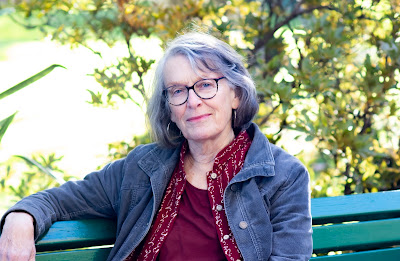
Kate Braid

I was recently hired for a job teaching creative writing, and within, oh, five minutes of hearing this, Kate Braid had sent me dozens of files: course syllabi, lecture notes, exercise ideas, etc. This was a sign of her generosity, no doubt, but even more so it taught me that Kate likes to meticulously write out every word she says in a lecture. In that spirit, and in her honour, I’ve decided to read my own meticulous notes meticulously off this piece of paper. So I apologise in advance if I rarely look up over the next few minutes.
 
I’ve spent the last four years working with Kate Braid as two of the co-coordinators (along with Christopher Levenson and Diane Tucker) of the Dead Poets Reading Series, and that experience has  helped me in preparing to present to Kate this year’s Mentorship Award. Not because I’ve learned a great deal from her in that time – though I have, of course – but because running a poetry reading series teaches you how to herd cats. To have five poets show up in the same place at the same time and stick to their time limits, is a formidable task. To round up the myriad ways in which Kate has mentored those around her feels equally formidable.
 
OK, let’s start the list: Kate has taught at SFU (Women’s and Labour Studies), UBC, BCIT, and, for ten years, at Malaspina in Nanaimo (now UVI). She’s been a key member or organiser of a wide array of community groups, as well, from the Vancouver Industrial Writers Union, to the Writers Support Group “Sex, Death and Madness,” the Prosody Group “Compossible” (yes, a writers group devoted to the patterns of rhythm and sound used in poetry. This woman is not messing around), the Non-Fiction Writers Group “the Memoiristas,” and a series of poetry salons she has run in recent years. Many of these groups, such as the Prosody group, were born – in part or in whole – out of questions or challenges Kate faced in her own writing. Most introverted writers would read a book or the internet in search for answers, or simply hide our ignorance and fears deep down inside us in hopes they might eventually turn into diamonds. But Kate builds communities around her questions, and generates answers not just for herself, but for whole groups of people beset by the same questions and same fears. 
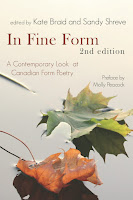
In Fine Form,
2nd Edition
OK, back to the list. Really, we’re only getting started. On top of her teaching and her writing communities, there is the Dead Poets Reading Series, which Kate has helped run for the last four years, and the In Fine Form Anthology, which Kate edited with Sandy Shreve a decade ago, and which has been reissued in a second edition just this last month. That book has been an endless source of insight for writers, students and teachers throughout the country. 

And we haven’t even gotten to her work in the construction industry: from 1977 until 1992, Kate worked as a labourer, apprentice and journeywoman carpenter. She was one of the first qualified women carpenters in British Columbia, the first woman to join the Vancouver local of the Carpenters’ Union, the first to teach construction full-time at the BCIT, and one of the first women to run her own construction company. But damn it, Kate, this is a writing Mentorship award, so you can forget about me praising all that groundbreaking work! You see, the cats run off everywhere if you let them. But I have learned the discipline to reign them in.

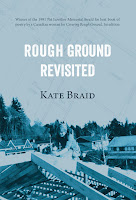
Rough Ground
Revisited
Similarly, I could get bogged down in what a talented writer Kate is. I could list her five celebrated poetry titles, one of which (Covering Rough Ground) was recently reissued by Caitlin Press. Her memoir Journeywoman, her anthologies, and her many essays, academic and otherwise. But this isn’t an award for your writing, Kate! So you can forget that!

I’m just talking about mentorship. Which, of course, is as impossible as cat herding. Because the way Kate mentors is through her actions, her life. By being Kate Braid, in her totality, and in doing that showing a path for the rest of us, inspiring to be ourselves, in our totality, which is an incredibly difficult thing to do.

I reached out to a few people who were mentored by Kate, or worked alongside her in mentoring others, and asked for their favourite memories of Kate. It should be noted (and it’s no small note!) that every one of them replied quickly, with a precise and detailed memory. These are poets, remember. And they were organized and punctual. It says more about Kate, and her role in their lives, than it does about poets, I assure you.
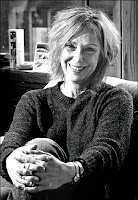
Marilyn Bowering
Marilyn Bowering, who worked with Kate at Malaspina, noted that:

Kate’s care of the students who were in her classes, when we taught together at Malaspina, was outstanding. It was never a matter of doing a job; for Kate, teaching was a trust; and she took seriously the idea that helping students discover their creativity would open their worlds. Kate’s core value is compassion.
Susan McCaslin spoke of how she met Kate in 1997. She said:

Almost immediately after conversing with Kate, the word “integrity” sprang to my mind, and integrity it has been to this day: integrity in the sense of words matching action, words and acts moving from wholeness to wholeness. Kate has a gift for listening and responding honestly, the listening always preceding the response.
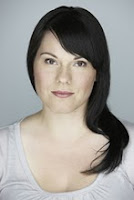
Elizabeth Bachinsky
Elizabeth Bachinsky
remembered a time very early in her own writing life when Kate, at a reading, dedicated a poem to Liz. She said: 
I was so beside myself in the audience. That small act sure left an impression on me. Kate has always been so generous with all of us young writers. She's taught me that even a small gesture like that can mean so much to an emerging poet; so  that when I have the opportunity to reach out and acknowledge people, I do. What a lovely person Kate is. What a fierce writer. A force and an inspiration. 
Amber Dawn’s very first writing class was with Kate, at UBC. She said this:
I was terrified of the creative writing classroom. Kate's warmth and rigor as a mentor taught me to be an engaged peer. She taught not just to respond to poetry, but to show up for other writers. To let the collective knowledge of the classroom lift us all up as poets. To this day, being taught to value my sense of belonging within literary communities has been a lesson even more powerful than being taught about craft itself.
And that is the point, isn’t it? To be taught, through writing, lessons that exceed the craft itself. Writing means a whole lot, but it's far from everything. It’s one room in the house (yes, that will be my one terrible construction analogy).

I was at a talk a couple years ago, where poet Kwame Dawes was speaking about Obsidian, a literary journal for African-American writers. He was asked why he worked tirelessly on it, all his years as editor, when few people read literary journals. His answer was that he was building a home for writers. And, he said, “If you build a home, you can live in that home.” 

It was so simple, yet it struck right through me. And that line comes back to me again and again when I think of Kate, who has for decades been showing us how to live a full life, with writing as a key component. She creates communities that sustain others, and that in the process sustain her as well. She gives out to gain. And what better lesson is there for all of us to learn?

For all these reasons and more, I’m incredibly honoured to present Kate Braid with the 2016 Pandora’s Collective BC Writer Mentorship Award. 

1/27/2022

in that way, we are exactly alike

It seems to me that the invitation of poetry is to bring your whole life to this moment, this moment is real, this moment is what we have, this moment in which we face each other, and if the poem is any damn good at all, it invites you to bring your whole life to that moment, and we are good poets inasmuch as we bring that invitation to you, and you are good readers inasmuch as you bring your whole life to the reading of the poem. And the process is the same for both of us. In that way, we are exactly alike. We are different in what we do—the writing of the poem is of course different. But it involves the same process; it’s just coming at it from the other side of the mirror.

- Muriel Rukeyser, in conversation with Pearl London in 1978, from Poetry in Person: Twenty-five Years of Conversations with America's Poets (ed. Alexander Neubauer, Knopf, 2011).

1/24/2022

drawn into a life higher than that to which they have been born

The college of imagination which conducts the discourse of art is not confined by time. Just as material gifts establish and maintain the collective in social life, so the gifts of imagination, as long as they are treated as such, will contribute toward those collectives we call culture and tradition. This commerce is one of the few ways by which the dead may inform the living and the living preserve the spiritual treasures of the past. To have the works of the past come to life in the active imagination is what it means “to have gathered from the air a live tradition,” to use Ezra Pound’s wonderful phrase. Moreover, as a commerce of gifts allows us to give more than we have been given, so those who participate in a live tradition are drawn into a life higher than that to which they have been born. Bestowed from the dead to the living and from the living to the unborn, our gifts grow invisibly among us to sustain each man and woman above the imperfections of state and age.


- Lewis Hyde, from The Gift: Creativity and the Artist in the Modern World.


1/18/2022

Poetry Month starts early!


My National Poetry Month interview series with Read Local BC is back for a fourth year! In previous years, we've released two interviews a week throughout April. This year we're slowing things down a bit by starting early: releasing an interview a month in January, February and March, before releasing four in April. 

The first interview of this year's series went up today, and it's a real delight (and ended more entertainingly than any interview yet!). In it, I chat with Ellie Sawatzky about her debut poetry collection, None Of This Belongs To Me. You can read the interview here.

Huge thanks as always to Read Local BC for their ongoing support of this project, and of poetry in British Columbia. The next interview will be up in February, and they'll arrive steadily after that. Keep an eye on ReadLocalBC.ca, and the Read Local BC "#NPM2022" hashtag, until the end of April!

And if you need your interview fix right now, remember that I have 80+ interviews posted right here on this blog, which you can review on a snazzy web page here

1/17/2022

that in us which is a gift and not an acquisition

 [The artist's] appeal is made to our less obvious capacities: to that part of our nature which, because of the warlike conditions of existence, is necessarily kept out of sight within the more resisting and hard qualities - like the vulnerable body within a steel armor... the artist appeals... to that in us which is a gift and not an acquisition - and, therefore, more permanently enduring. He speaks to our capacity for delight and wonder, to the sense of mystery surrounding our lives; to our sense of pity, and beauty, and pain; to the latent feeling of fellowship with all creation - to the subtle but invincible conviction of solidarity that knits together the loneliness of innumerable hearts, to the solidarity... which binds together all humanity - the dead to the living and the living to the unborn.


- Joseph Conrad, as quoted in The Gift: Creativity and the Artist in the Modern World by Lewis Hyde.

1/13/2022

you give yourself away

Some people are led to the writing of poetry - or to painting, dance or music - on the promise that it will allow them to "express themselves." Insofar as you are a part of the older, richer, larger and more knowledgeable whole we call the world, and insofar as you are a student or apprentice of that world, expressing yourself may be worth the time and trouble. But if it is really only your self that you are interested in, I venture to think that performing someone else's poem - reciting it or reading it aloud - is likely better medicine that writing. Poetry, like science, is a way of finding out - by trying to state perceptively and clearly - what exists and what is going on. That is too much for the self to handle. That is why, when you go to work for the poem, you give yourself away. Composing a poem is a way of leaving the self behind and getting involved in something larger.


- Robert Bringhurst, from his lecture "Poetry and Thinking," delivered to Luther College, University of Regina in 2001 and published in Thinking and Singing: Poetry & the Practice of Philosophy (ed. Tim Lilburn, Cormorant Books, 2002).

1/10/2022

all they mean by poetry is poems

Herakleitos - evidently the earliest prose poet whose work survives - says... "All things think and are linked together by thinking." Parmenides answers to him in verse: "To be and to have meaning are the same." These are concise definitions of poetry and brief explanations of how it has come to exist. Poetry is not manmade; it is not pretty words; it is not something hybridized by humans on the farm of human language. Poetry is a quality or aspect of existence. It is the thinking of things.

Language is one of the methods we use to mime and to mirror and admire it, and for that reason poetry, as mirrored in human language, has come to be taught in the English Department. They know at least as much about poetry in the Physics and Biology departments, and in the Mathematics and Music departments, but there they always call it by different names. If they are really old-fashioned, they might even call it Truth or Beauty. If they are really up to date, they will never use such words, and the silence they put in their place is the name they use for poetry. Those who are really up to date in the English Department now and then still mention poetry. But all they mean by poetry is poems. Poems are the tip of the iceberg afloat on the ocean of poetry.

...

When you think intensely and beautifully, something happens. That something is called poetry. If you think that way and speak at the same time, poetry gets in your mouth. If someone hears you, it gets in their ears. If you think that way and write at the same time, then poetry gets written. But poetry exists in any case. The question is only: are you going to take part, and if so, how?

Simone Weil wrote something once in her notebook about the purpose of works of art, and the purpose of words: "Their function is to testify, after the fashion of blossoming apple trees and stars." When words do what blossoming apple trees do, and what stars do, poetry is what you read and hear.


- Robert Bringhurst, from his lecture "Poetry and Thinking," delivered to Luther College, University of Regina in 2001 and published in Thinking and Singing: Poetry & the Practice of Philosophy (ed. Tim Lilburn, Cormorant Books, 2002).

1/06/2022

appropriation with the current reversed

Anthropocentrism, in Walt Disney films or plans for wildlife management, is clearly an evil we wish to avoid. But when we take stock of our situation as language users with brains and organs of perception which dictate that we see and describe the world in human ways, we can see that, at bottom, a human perspective is impossible to avoid. Though we may devote attention to the screech owl or the cat-tail moss, we are inevitably translators of their being, at least wen we come to representation. "Isn't art," [Emmanuel] Levinas asks rhetorically, "an activity that gives things a face?" Even an artist like Cézanne, whose work, as Merleau-Ponty puts it, renders a perspective "from below the imposed order of humanity" as if "viewed by a creature of another species," has not truly managed to escape the perspectival cage. He is still daubing pigment on stretched canvas, as no other species has been known to do.

So here's how I'm reading the Face: it's an address to the other with an acknowledgment of our human-centredness built in, a salutary and humbling reminder. But we can perform artistic acts in such a way that, in 'giving things a face,' the emphasis falls on the gift, the way, for example, a linguistic community might honour a stranger by conferring upon her a name in their language. Homage is, perhaps, simply appropriation with the current revered; 'here,' we say to the thing, 'is a tribute from our culture, in which having a face is a premier sign of status.' We can, in short, try to be like Cézanne rather than Mount Rushmore.


- Don McKay, from his essay "The Bushtits' Nest" in Thinking and Singing: Poetry & the Practice of Philosophy (ed. Tim Lilburn, Cormorant Books, 2002).

12/27/2021

the 2021 roll of nickels year in review

2021 was another busy pandemic year here at Roll of Nickels. I continued my pandemic-inspired efforts to increase content on the blog, posting ten new interviews (see below!), three new poem/poet profiles (Diane Tucker, Tolu Oloruntoba and Molly Cross-Blanchard), and fifty-five new quotes on writing.

Did you have "Elementary school playground
book launch" on your COVID bingo card?
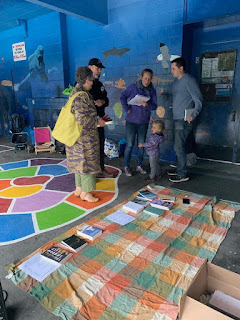
2021 was also the year I launched a book during a pandemic! What fun! Strangers came out in April, and was formally launched in May, with an online event featuring Sadiqa de Meijer and Sue Sinclair, and hosted by my editor Luke Hathaway. You can view that here. Unable to tour the book, this summer I took my tour local, with readings around Vancouver (even those were fraught - one was canceled by a record-shattering "heat dome," another was rained our and had to be moved into the overhang area of an elementary school playground... normal stuff!). I loved getting to hear new poems from fellow pandemic-launching poets - eleven total guest readers over the course of the series. Readings at the Vancouver Writers Fest, Word Vancouver, and the Real Vancouver Writers Series kept me busy all fall, and helped me feel like it might really be reaching readers out there in the world! Reviews of the book and also interviews about the book kept me afloat despite the lack of in-person connections. Thank you to everyone who spent some time with Strangers in 2021 - it meant a great deal to me.

My non-book poetry publishing was all haiku and very short poems, which appeared in a variety of magazines (including a few online). 2021 was perhaps most notable as the year my internet silliness spilled over into the real world: after 25 rounds of it online, I brought my Emoji Book Titles into an actual pub for the Emoji Lit Pub Quiz at the Vancouver Writers' Festival. Even more bizarrely, after a couple years of spamming the internet with William Carlos Williams "Plum Poem" memes, Juliane Okot Bitek called my bluff and gave me a $50 gift certificate to Massy Books to stop making them. Calamity ensued. In the end, my right to make plum memes was restored, and $735 was raised for Battered Women Support Services. I know, right? A very normal year all around.

But on to the main attraction. My 2021 interviews:

April 2021: Rain That Washes Away The Pretty Surface Of Things: An Interview with Jen Sookfong Lee
"Vancouver renews itself constantly, with new condo towers and restaurants and migrations, but the history constantly bubbles up to the surface, impacting the contemporary. We are a port city, where vice has always been and will continue to be an industry all on its own. We have always been a place where people come to be at the end of the world, when the rest of it has become too much. And no matter how hard developers build on old neighbourhoods, the descendants of those razed communities are still alive, still remembering. All of this is a structure that my poems, and my prose, mimic—circularity, past timelines imposing on the current day, rain that washes away the pretty surface of things." - Jen Sookfong Lee

April 2021: I'm Not Supposed to Be Here: An Interview with Junie Désil
"That moment of recognition is beautiful when you read something that speaks to you and your experiences. Something that understands the deepest, most secret parts. That is what I love the most about writing and reading, and what I look for." - Junie Desil
April 2021: One Foot In, One Foot Out: An Interview with Patrick Friesen

"In my life I arrive at times where I am silent, need to be silent, and sometimes I think this is the way it should be from then on. I have great admiration for those mystics who achieved silence. But how does that happen? Would I run out of words? Get tired of putting them on the page? Would the words feel so empty finally that silence already existed, only I had to recognize it?" - Patrick Friesen

April 2021: A Third Animal Emerges: An Interview with Lillian Boraks-Nemetz

"I come from a broken language. I wrote in Polish as a little girl, then I was told when we came here that my past did not exist, only my English future. When I saw a Polish poem translated into English, I saw the possibility of my own writing." - Lillian Boraks-Nemetz


April 2021: Achieving An Equilibrium: An Interview with Cicely Belle Blain

"I definitely had the potential whiteness of the audience in mind when writing, which is one thing I regret about the book. It is only very recently as people start to question and critique diversity and inclusion consulting or anti-racism training, that I realised a lot of anti-racism education is directed towards white people. We simplify big concepts, or sometimes even exploit our own trauma, to educate white people” - Cicely Belle Blain

April 2021: Wherever We Are Going, We Are Going Together: An Interview with Terence Young

"The strange thing about death is that we seem to fear it more when we are farthest from it, when we are young. Existential dread is a young person’s malady, and our fear subsides, moderates as we grow older. More and more, I feel the way I do when I board a plane. I look around at all the passengers and tell myself that wherever we are going, we are going together. The universality of death makes it easier to accept somehow.   " - Terence Young

April 2021: Gesturing Out To Different Horizons: An Interview with Dallas Hunt

"There are so many amazing Indigenous poets at this particular moment. That said, I think you’re right in saying that there is a long lineage of Indigenous writers who have paved the way for many of us. Also, there is this term that emerges in relation to Indigenous writing—”renaissance”—that I think is deeply problematic and doesn’t gesture to the peoples who have been writing for decades (Linda Hogan, Chrystos, Eden Robinson, among others)." - Dallas Hunt

April 2021: That Prism of Perspectives: An Interview with Barbara Nickel

"In my previous books, not wanting to be misunderstood or boxed in, I think I’ve tried to hide my thirst for the spirit inside music or my Mennonite family history or even in the sometimes convenient obscurity of language. In these poems—even visually there’s a lot of bare space—there’s really no place to hide..." - Barbara Nickel

April 2021: Speaking to my kohkum Through Dreams: An Interview with Selina Boan

"Poetry doesn’t always have to make “sense” in order for it to hold emotional weight or feeling. The same can be said for learning a new language—though you don’t necessarily know yet what exactly is being said, you can feel and know the language in your body. That has been my experience with nêhiyawêwin. " - Selina Boan

July 2021: Salvaging My Old Dreams: An Interview with Matsuki Masutani

"I was unaware of my poems being minimalist until others pointed it out. It seems that I want to get out of the creative mode as soon as I am in it because of my shyness or self-consciousness." - Matsuki Masutani

I've got a lot to look forward to in the new year, including three essays which should all be coming out in January (in Event, Canadian Notes & Queries, and Resonance: Essays on the Craft and Life of Writing). On the blog, look for extended versions of interviews with Steven Heighton, Sadiqa de Meijer and Shaun Robinson (from which excerpts were recently published, respectively, in The Walrus, Arc and CV2), and, of course, a bunch of other surprises! 

Happy New Year, all!